This is probably one of the most searched questions among international students in Australia right now and honestly, it deserves a straight, honest answer rather than the vague reassurances that float around on student forums and social media.
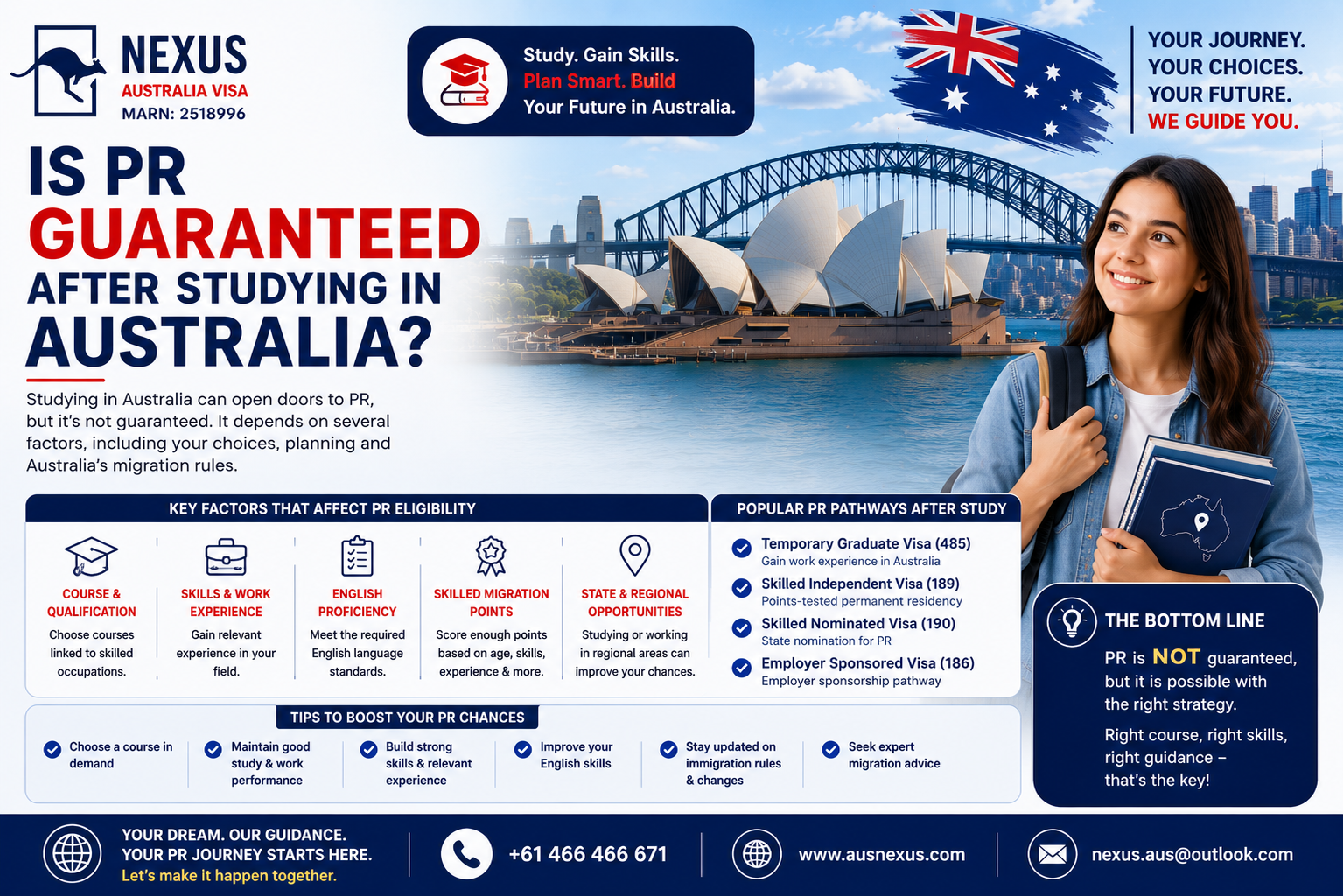
So let’s get right into it. No, PR is not guaranteed after studying in Australia. Not even close. And the sooner you understand that, the better positioned you’ll be to actually get it.
That might sound harsh, but it’s genuinely the most helpful thing anyone can tell you. Because the students who end up stuck visa expiring, no clear pathway, scrambling for options are almost always the ones who spent their entire degree believing that graduation would somehow automatically open the door to permanent residency. It doesn’t work that way. But here’s the thing: with the right understanding and the right plan, PR is very much achievable. You just have to go after it intentionally.
Where Does This Myth Come From?
It’s worth understanding why so many international students arrive in Australia believing PR is a natural outcome of completing their degree. Part of it comes from well-meaning but outdated advice passed down through communities. Part of it comes from migration agents or education consultants overseas who oversimplify the process to sell study packages.
And part of it, honestly, is wishful thinking. Australia is an incredible country to build a life in, and the hope of staying permanently is completely understandable. The problem is when that hope isn’t backed up by a realistic strategy and too many students don’t discover the gap between expectation and reality until they’re already in their final semester with very little time to course-correct.
The truth is that Australian qualifications do genuinely help your migration case. They earn you bonus points in the skilled migration points test, they can strengthen your skills assessment, and they signal to the system that you’ve been educated to Australian standards. But help is very different from guarantee and understanding that difference is everything.
What PR Actually Depends On
Permanent residency in Australia isn’t awarded on the basis of study alone. It’s the result of meeting a specific combination of requirements that together paint a picture of your eligibility and competitiveness in the skilled migration system. Here’s what actually determines whether you get there:
Your Points Score
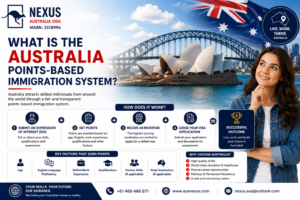
Australia’s skilled migration system is points-based, and your score across several categories determines how competitive you are when invitation rounds are held through SkillSelect. Points are awarded for your age, English proficiency, work experience, qualifications, state nomination, and Australian study among other factors.
The minimum threshold is 65 points, but let’s be real: 65 points rarely gets you an invitation in any competitive occupation. Most successful applicants in popular fields are sitting at 80, 85, or even 90 points before they receive an invitation. If your score sits at the lower end, you could submit an Expression of Interest and genuinely wait years without ever being invited.
Occupation Demand
This one catches a huge number of graduates off guard. Your nominated occupation must appear on an eligible occupation list for the visa subclass you’re targeting and not all occupations are treated equally. Some are in high demand and attract regular, competitive invitations. Others have been removed from lists entirely, or are so saturated with applicants that invitations are extremely rare.
The occupation you studied for and the occupation that works best for your migration strategy aren’t always the same thing. Some degree programs cover multiple eligible occupations, and choosing strategically between them based on current demand and list placement can make an enormous difference to how quickly and easily you receive an invitation.
Work Experience After Graduation
Your degree gets you in the conversation. Your work experience is what actually moves you forward. Relevant, skilled employment in your nominated occupation is not just a bonus it’s a fundamental part of your PR eligibility and your points score.
Most skilled visa pathways expect at least one year of relevant skilled work experience, and Australian work experience is weighted more heavily in the points test than overseas experience. This is a huge reason why the Temporary Graduate Visa (Subclass 485) exists it gives you the runway to build that experience on Australian soil before you lodge your PR application.
💡 Worried your profile isn’t strong enough for PR yet? Don’t guess – get a proper assessment. The team at Nexus Australia specialises in helping international graduates understand exactly where they stand and what steps will move them forward fastest. Led by MARA-registered agent Mandeep Gill (MARN: 2518996), Nexus offers a completely free initial case evaluation. Visit ausnexus.com or WhatsApp +61 466 466 671 to book yours today.
English Proficiency
Most skilled visas require proof of English ability through a recognised test IELTS, PTE Academic, TOEFL iBT, or OET. Meeting the Competent English standard (roughly IELTS 6.0 in each band) is the minimum bar for eligibility, but it won’t earn you any bonus points.
Scoring at Proficient English level (IELTS 7.0 overall) adds 10 points to your score. Reaching Superior English (IELTS 8.0 overall) adds 20 points. Those aren’t small numbers — in a competitive invitation pool, 10 or 20 extra points can completely transform your chances of getting invited versus waiting indefinitely.
Many graduates who’ve studied in English for years assume they’ll naturally score well. Sometimes that’s true. But don’t assume take the test early, know your score, and if there’s room to improve, invest in preparation before you submit your Expression of Interest. It’s one of the highest-return things you can do.
Migration Policies at the Time of Application
This is the part that’s genuinely outside your control and it’s important to acknowledge it honestly. Australia’s migration policies change. Occupation lists get updated, points test thresholds shift, state nomination programs open and close, and government priorities evolve based on labour market conditions and broader policy decisions.
Something that was possible for a graduate two years ago might look very different today. A visa subclass that suited your profile when you started your degree might have changed by the time you graduate. This is exactly why staying current on policy changes or having someone in your corner who does matters so much throughout your migration journey.
The 485 Visa – Your Bridge, Not Your Destination
Most international graduates apply for the Temporary Graduate Visa (Subclass 485) after completing their studies. This visa allows you to live and work in Australia temporarily giving you time to build the experience and profile you’ll need for PR. It’s an incredibly valuable stepping stone, and using it well is one of the most important things you can do for your long-term migration outcome.
The length of your 485 visa depends on your level of study and where your institution was located. Graduates from regional institutions often receive additional time, which is one reason regional study has become increasingly strategic among students with PR intentions. During this period, your focus should be on securing relevant skilled employment, boosting your English score if needed, completing your skills assessment, and understanding your points position before your visa runs out.
What the 485 is not, however, is a guarantee of anything beyond the temporary stay it provides. Too many graduates treat it as a relaxed buffer period rather than a critical window of opportunity and then find themselves scrambling when it’s nearly expired with no clear PR pathway in sight.
Skills Assessment – The Step Many Students Leave Too Late
Before you can submit an Expression of Interest for skilled migration, you need a formal skills assessment confirming that your qualifications and experience meet Australian professional standards for your nominated occupation. Each occupation has a specific assessing authority Engineers Australia, the Australian Computer Society, CPA Australia, AHPRA for healthcare professionals, and so on.
Many graduates assume their Australian degree automatically satisfies this requirement. In reality, the skills assessment is a separate, formal process and it takes time. Some assessments take several months to process, and a negative or delayed outcome can significantly set back your PR timeline if you haven’t planned for it early enough.
Starting your skills assessment as early as possible ideally before or during your 485 visa period rather than after gives you time to respond to any issues, gather additional evidence, or adjust your strategy if needed. Leaving it until the last minute is one of the most avoidable mistakes in the graduate-to-PR journey.
💡 Nexus Australia has helped countless international graduates navigate the skills assessment process from choosing the right assessing authority to preparing a submission that gives them the best possible chance of a positive outcome. The team knows what assessors look for and how to present your case compellingly. Get in touch at ausnexus.com or call +61 466 466 671 to find out how they can help you.
State Nomination – A Strategy Worth Considering
If your points score isn’t high enough for the fully independent Subclass 189 visa, state nomination through the Subclass 190 or regional nomination through the Subclass 491 could be the pathway that makes PR realistic for you. State nomination adds 5 extra points to your score, while regional nomination adds 15 and in a competitive invitation environment, those points genuinely matter.
Each Australian state and territory publishes its own occupation lists and nomination criteria based on local workforce needs. South Australia, for example, has been actively nominating a wide range of occupations particularly in healthcare, trades, and regional industries making it a strategic destination for graduates in those fields.
Regional nomination through the 491 does require you to live and work in a designated regional area for at least two years before you can apply for permanent residency through the Subclass 191. For graduates who are flexible about location, this pathway often offers the fastest realistic route to PR especially for those who aren’t yet scoring high enough for the more competitive independent visa.
Common Mistakes That Derail the PR Journey
Understanding what goes wrong for graduates who don’t make it to PR is just as important as knowing what to do right. Here are the patterns that come up again and again.
Waiting too long to start planning. PR planning shouldn’t begin when you’re six months away from your 485 visa expiring. Ideally, it starts during your final year of study or even earlier. The earlier you understand your profile and your pathway, the more time you have to strengthen your position.
Choosing an occupation based on study alone, not migration strategy. Your degree might qualify you for several different occupation codes. Some of those codes are in high demand and invite regularly. Others are saturated or not on the relevant lists at all. Choosing without guidance is essentially guessing and the wrong guess can cost you years.
Underestimating the importance of work experience. Some graduates take any job available during their 485 period rather than strategically pursuing roles that align with their nominated occupation. This feels practical in the short term but can leave you short on the skilled work experience points you’ll need for PR.
Not getting professional advice until it’s too late. By the time some graduates finally speak to a registered migration agent, their options have narrowed significantly. Earlier advice almost always means more options, more time, and better outcomes.
So What Should You Actually Do?
If you’re currently studying in Australia and PR is on your radar and honestly, if you’re an international student, it probably should be here’s the mindset shift that makes the biggest difference. Stop thinking of your degree as the destination and start thinking of it as the foundation. PR is something you build toward, deliberately and strategically, not something that happens to you after graduation.
Get clear on your points score now. Understand which occupation you’ll be nominating and whether it’s in demand. Find out which skills assessment body applies to your field and what they’ll need from you. Sit your English test and know where you stand. Research state nomination options that align with your occupation. And most importantly talk to someone who genuinely knows the Australian migration system and can map out your specific pathway with real expertise.
💡 That’s exactly what the team at Nexus Australia does every single day. Based in Adelaide (Suite 103, 147 Pirie Street, CBD), with support offices in India and Canada, Nexus Australia is a MARA-registered migration consultancy with deep experience helping international graduates turn their Australian study into a genuine pathway to permanent residency. Founder Mandeep Gill brings over 20 years of professional experience and a personal commitment to every client’s success no matter how straightforward or complex the case. Visit ausnexus.com, email info@ausnexus.com, or WhatsApp +61 466 466 671 to claim your free case evaluation today.
The Bottom Line
PR after studying in Australia is absolutely possible but it is never automatic, and it is never guaranteed. The qualification helps. The Australian study bonus points help. The cultural familiarity and local networks help. But none of it replaces the need for a clear, well-informed, strategic approach to your migration journey.
The graduates who get PR aren’t the ones who assumed it would work out. They’re the ones who understood what was required, planned ahead, made smart decisions throughout their study and 485 visa period, and got expert guidance when they needed it. That can absolutely be you but it starts with being honest about where you are and intentional about where you want to go.
Your permanent future in Australia is within reach. Go after it with a plan.
Start your journey the right way. Visit www.ausnexus.com or call +61 466 466 671 to speak with the Nexus Australia team your free case evaluation is just one conversation away.