
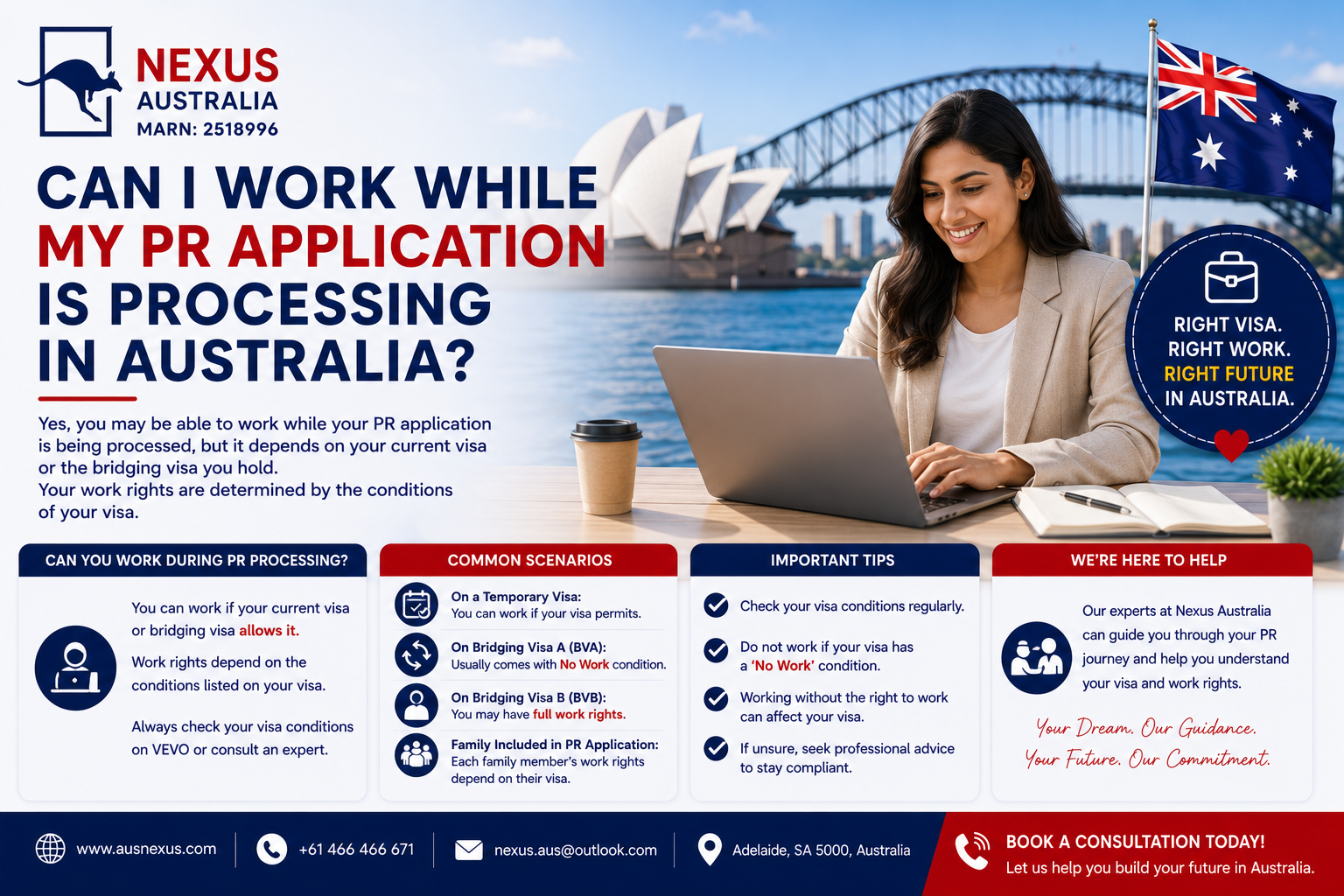
Applying for Australian Permanent Residency (PR) is an exciting step toward building a long-term future in one of the world’s most desirable countries. Whether you are applying through skilled migration, employer sponsorship, family sponsorship, or another pathway, waiting for a visa decision can sometimes take several months.
During this period, many applicants have one important question: Can I continue working while my PR application is being processed? The answer depends on your current visa status and the conditions attached to your visa.
Understanding your work rights during the PR processing period is extremely important because working without authorization can affect your visa outcome and future immigration opportunities.
At Nexus Australia Visa- Adelaide, we help applicants understand Australian visa conditions, work rights, and migration requirements to ensure they remain compliant throughout their PR journey.
Can You Work While Waiting for PR Approval?
In many cases, yes, you may be able to work while your Australian PR application is being processed. However, your ability to work depends entirely on the visa you currently hold.
Australian immigration authorities assess work rights based on your current visa conditions rather than the fact that you have lodged a PR application.
Simply submitting a permanent residency application does not automatically grant unrestricted work rights. Your existing visa conditions will continue to apply until another visa becomes active.
Understanding these conditions can help you avoid accidental breaches that could negatively affect your immigration status.
Why Visa Conditions Matter
Every Australian visa comes with specific conditions that determine what activities you can undertake while staying in the country.
Some visas provide full work rights, while others may limit the number of hours you can work or restrict employment entirely.
When your PR application is under assessment, immigration authorities expect you to continue following the conditions of your current visa.
Failure to comply with these requirements may result in visa complications, delays, or possible refusal of future applications.
Working on a Temporary Visa During PR Processing
Many PR applicants hold temporary visas while waiting for permanent residency outcomes. These visas often include work rights that allow employment during the processing period.
For example, holders of employer-sponsored visas, graduate visas, and certain skilled work visas typically continue working under their existing visa conditions.
As long as the temporary visa remains valid, applicants generally maintain the same employment rights they held before lodging the PR application.
The key factor is ensuring compliance with the conditions attached to the current visa.
What Happens When Your Current Visa Expires?
A common concern among applicants is what happens if their current visa expires before a decision is made on their PR application.
In many situations, applicants receive a bridging visa that allows them to remain lawfully in Australia while waiting for immigration authorities to process their application.
The bridging visa may include work rights depending on the visa type and individual circumstances.
Understanding your bridging visa conditions is essential before accepting employment or changing jobs.
Can You Work on a Bridging Visa?
Many bridging visa holders are permitted to work while waiting for a PR decision. However, not all bridging visas automatically include work rights.
Work eligibility depends on the specific bridging visa granted and the conditions attached to it.
Some bridging visas provide unrestricted employment rights, while others may have limitations or require separate permission before employment can begin.
Applicants should always review their visa grant notice carefully to confirm their employment status.
Bridging Visa A and Work Rights
Bridging Visa A is one of the most common visas issued to applicants who lodge a valid onshore visa application before their current visa expires.
In many cases, the work rights attached to the previous visa may continue under the Bridging Visa A arrangement.
The exact conditions depend on the applicant’s immigration situation and previous visa status.
Checking official visa conditions before commencing employment is always recommended.
Bridging Visa B and Employment
Bridging Visa B allows eligible applicants to travel outside Australia and return while waiting for a visa decision.
Work rights under Bridging Visa B usually mirror the conditions attached to the associated bridging visa arrangement.
Applicants should carefully review the conditions outlined in their visa grant notice before making employment decisions.
Professional migration advice can help clarify any uncertainties regarding work eligibility.
Bridging Visa C and Work Permission
Some applicants receive a Bridging Visa C when they submit a new visa application after their previous substantive visa has expired.
Work rights under this visa may vary depending on the applicant’s circumstances and immigration history.
In some cases, applicants experiencing financial hardship may be eligible to apply for permission to work.
Each situation is assessed individually by Australian immigration authorities.
Student Visa Holders Applying for PR
Many international students eventually apply for permanent residency through skilled migration pathways after completing their studies.
While waiting for a PR decision, student visa holders must continue following the work restrictions attached to their student visa unless another visa becomes active.
Work rights for students can vary depending on visa conditions and government policies in effect at the time.
Understanding these limitations helps applicants avoid unintentional visa breaches.
Employer-Sponsored Visa Holders
Applicants holding employer-sponsored visas often continue working with their sponsoring employer while their PR application is being processed.
Their work rights generally remain linked to the conditions of their current visa until a new visa decision is made.
Changing employers without understanding visa requirements can sometimes create complications.
Seeking professional migration advice before making employment changes is highly recommended.
Skilled Migration Applicants
Applicants applying through skilled migration pathways may hold different temporary visas while waiting for PR approval.
Work rights depend entirely on the visa currently held and any bridging visa that becomes active during processing.
Many skilled workers continue working full-time while awaiting permanent residency outcomes.
Maintaining lawful employment is important throughout the migration process.
Can You Change Jobs While Waiting for PR?
Whether you can change jobs during PR processing depends on your current visa conditions.
Some visa holders enjoy unrestricted work rights and can move between employers freely. Others may be subject to sponsorship obligations or specific employment conditions.
Before changing employers, applicants should carefully review their visa requirements and seek professional guidance if necessary.
Making informed decisions can help prevent immigration complications later.
What Happens If You Work Without Permission?
Working without proper authorization can have serious consequences under Australian immigration law.
Applicants who breach visa conditions may face visa cancellation, refusal of future applications, or difficulties obtaining permanent residency.
Immigration authorities take compliance seriously and regularly review applicants’ visa histories during assessment processes.
Following employment conditions correctly is one of the most important responsibilities for visa holders.
How to Check Your Work Rights
The easiest way to confirm your employment rights is by reviewing your visa grant notice and associated visa conditions.
Applicants can also access their visa information through official immigration systems or seek guidance from a registered migration professional.
If you are unsure whether you can work, obtaining accurate advice before accepting employment is highly recommended.
A small misunderstanding can sometimes lead to significant immigration consequences.
Common Mistakes to Avoid
One common mistake is assuming that lodging a PR application automatically provides unrestricted work rights.
Another issue occurs when applicants fail to read their bridging visa conditions carefully before accepting employment.
Some individuals also change employers without understanding sponsorship obligations attached to their current visa.
Avoiding these mistakes can help ensure a smoother migration journey and stronger PR application outcome.
How Nexus Australia Visa- Adelaide Can Help
Navigating Australian immigration laws can feel overwhelming, especially when dealing with visa transitions, bridging visas, and employment rights.
At Nexus Australia Visa- Adelaide, we provide professional migration assistance for skilled migration, student visas, employer-sponsored visas, partner visas, and permanent residency applications.
Our experienced team helps applicants understand their visa conditions, work rights, and legal obligations throughout the immigration process.
We focus on providing reliable guidance, accurate information, and personalized migration solutions tailored to each client’s needs.
Final Thoughts
Working while your Australian PR application is being processed is often possible, but your eligibility depends entirely on the conditions attached to your current visa or bridging visa.
Submitting a PR application alone does not automatically grant employment rights, making it essential to understand your visa conditions carefully.
Maintaining lawful employment and complying with immigration requirements can help protect your application and support a successful migration outcome.
Visit Nexus Australia Visa- Adelaide today and receive expert guidance for your Australian PR application and migration journey.